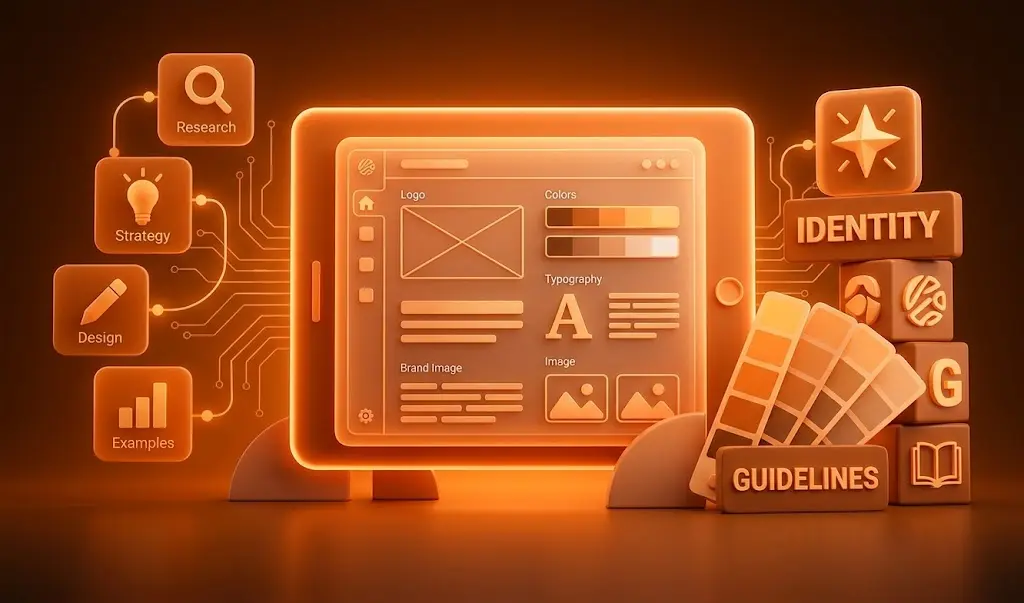
Brand Design
By

Paras Attri
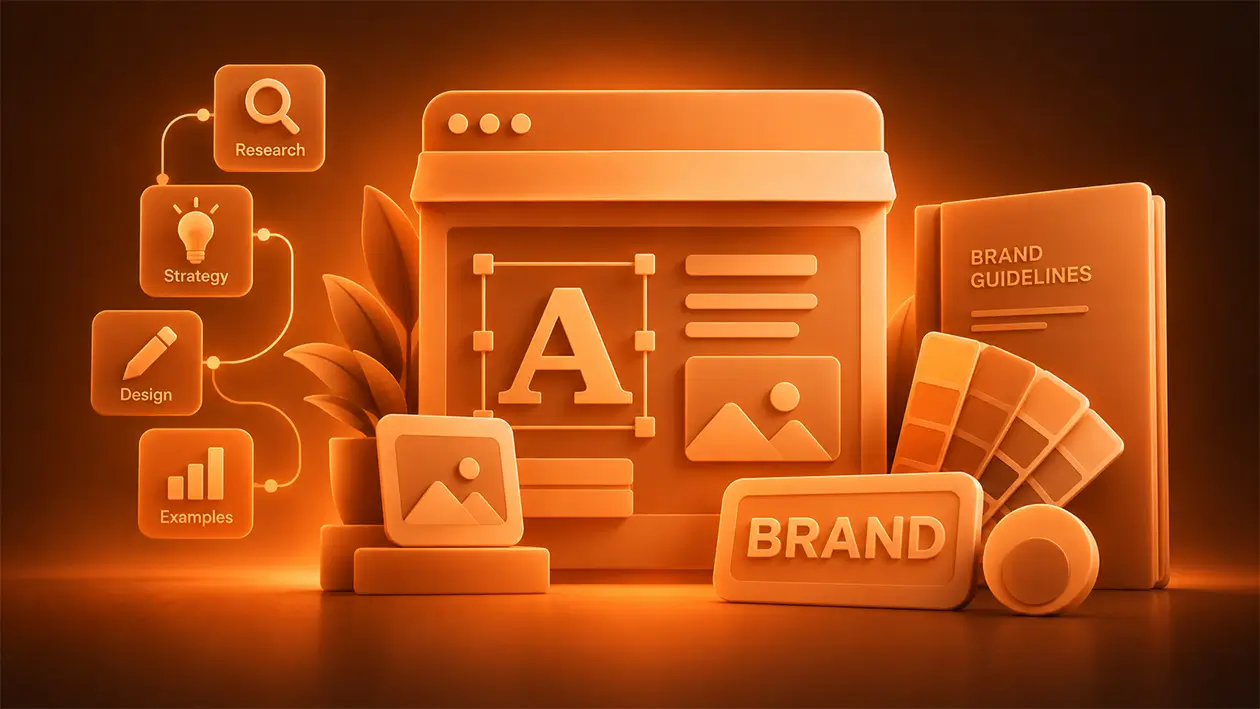


Brand design is the process of creating the visual identity that makes a business recognizable: its logo, colors, typography, imagery and the rules for using them together. Settle your strategy first, study competitors, build a logo that works well in small, keep fonts and colors limited, and write guidelines so every team stays consistent.
Brand design is the process of creating the visual elements that make a business recognizable. That includes your logo, color palette, typography, imagery and the rules for how they work together. When it's done well, people know it's you before they've read your name.
Here's a problem we see a lot. A company has a decent logo, but the website uses one shade of green, the sales deck uses another, and the LinkedIn banner was made by an intern in Canva. Nothing looks connected, so nothing sticks.
Brand Design vs Branding vs Brand Identity
People use these terms as if they mean the same thing. They overlap, but each one covers a different job.
Term | What it covers |
|---|---|
Brand strategy | Who you serve, what you stand for, how you're different |
Branding and brand identity | Your name, voice and visual system as a whole |
Brand design | The visual side: logo, colors, type, imagery |
Brand management | Keeping everything consistent as the company grows |
If you only remember one thing from this table, make it the order. Strategy gets decided before anyone opens Figma.
Core Elements of Brand Design
Element | What it does | Practical tip |
|---|---|---|
Logo | Your main identifier | Test it at 16px and in black and white |
Color palette | Triggers recognition fastest | 1–2 primary colors, 2–3 supporting |
Typography | Sets tone in every headline | Two typefaces is plenty |
Imagery | Shows what your brand feels like | Pick one photo style and stay with it |
Icons and illustrations | Explain ideas visually | Match line weight and corner style |
Shapes and patterns | Add texture to layouts | Pull them from your logo if you can |
Brand voice | How your words sound | Write a few "we say / we don't say" examples |
Graphic design for brand identity is where all of this comes together. A carousel post and a 40-slide investor deck should feel like they came from the same place, even if different people made them.
Why Brand Design Matters
Visitors size up a website in a few seconds. If the visuals feel scattered, they start wondering what else is scattered.
There's a cost angle too. Each ad or email you send with a consistent look adds to the recognition you've already built. Change the look every quarter, and you're paying to start over.
The Brand Design Process, Step by Step
1. Define your strategy
Who's your customer, what do you fix for them, and why you over the next option? Try to say it in two sentences. If that's hard, the designer will struggle too.
2. Research your market
Screenshot your five closest competitors' homepages and lay them out side by side. You'll probably notice they look alike. Maybe everyone's using navy and a geometric sans-serif. That's useful, because now you know what to avoid.
3. Design the logo
It needs to read clearly as a tiny browser tab icon and on the side of a trade show booth. Most designers sketch in black and white first, and for good reason. Color can hide a weak shape.
4. Pick colors and typography
Keep it tight. Every extra font or shade is one more thing someone will use wrong.
5. Build brand guidelines
This is the document that says how much space goes around the logo, which hex codes to use, and what font size headings should be. Include a page of misuse examples. People learn faster from "don't do this" than from rules.
6. Launch and manage
Switch everything over at once if you can: website, socials, email signatures, invoices. A half-finished rollout looks worse than the old brand did. After that, check in once a year.
Logo Ideas by Type
Hunting for logo ideas? It helps to pick the type before you start sketching.
Logo type | What it is | Example | Best for |
|---|---|---|---|
Wordmark | Name in a custom font | Short, distinctive names | |
Lettermark | Initials only | IBM | Long company names |
Symbol | Icon with no text | Apple | Brands people already know |
Combination | Icon plus name | Burger King | New brands building recognition |
Emblem | Text inside a badge | Harley-Davidson | Heritage brands |
To start, a combination mark is usually the safe bet. You can drop the name later once the icon is familiar. Whatever you choose, keep branding logo design simple enough that it still works when it's shrunk down on a phone.
Brand Design Examples Worth Studying
Brand | What changed | Lesson |
|---|---|---|
Mailchimp (2018) | Simplified mascot, bold yellow, new serif type | Playful can still look grown-up |
Slack (2019) | Cut an 11-color logo down to 4 colors | Simpler marks hold up at every size |
Dunkin' (2019) | Dropped "Donuts" from its name, kept orange and pink | Familiar colors carry people through a name change |
Gap (2010) | New logo pulled within about a week after backlash | Customers get attached to what you have |
Gap is the cautionary one. Its blue box logo had been around for more than two decades, and the new one showed up with no warning. Customers hated it, loudly.
Common Brand Design Mistakes
Copying competitors. It feels safe but makes you blend in.
Logo before strategy. You end up redesigning once the positioning changes.
Too many fonts. Two is enough. Four on the website and two more in the brochure is chaos.
No guidelines. Every team fills the gaps differently, and the brand slowly drifts.
Chasing trends. Today's gradients and 3D icons can look dated in two years.
When to Consider Rebranding Services
Rebranding services are worth it when something real has shifted. Maybe your product grew up, you're moving into a new market, or your current look keeps pulling in the wrong buyers.
Boredom is a bad reason. You see your logo all day. Your customers see it occasionally and are probably fine with it.
Doing It Yourself vs Getting Help
A founder with a clear strategy and a good eye can get a simple logo and color palette off the ground. Bring in help when the brand has to carry more weight: you're raising money, entering a new market, launching across many channels at once, or your team keeps producing work that doesn't match.
The options range from a freelance designer for a logo to an agency that handles strategy, identity and guidelines together. Our guide to brand design services compares what each option includes, what it typically costs and the questions to ask before you hire.
Conclusion
Before you brief anyone, sit down and write that two-sentence strategy: who you're for and why they should pick you. It's a small job, and it will cut weeks off the revision rounds.
When you do talk to designers, watch what happens in the first call. A good partner asks about your customers before talking about colors. Ask them to walk you through one past project, from the brief to the final guidelines, and see how much thinking shows up before the design.
Thinking about a new identity or a refresh? The Mad Brains takes you from strategy to logo to a full visual system in one process. Talk to our team and we'll help turn your strategy into a brand people remember.
FAQs
Last updated:
Paras Attri
SEO Content Writer at MadBrains
Paras Attri is an SEO Content Writer at MadBrains with 3.5 years of experience across SEO, AEO (answer engine optimisation) and GEO (generative engine optimisation). He writes content built to rank on Google and get picked up by AI search tools like ChatGPT and Google’s AI Overviews. His topics include ecommerce, UI/UX design, web and app development, and how AI fits into building digital products, all written in plain English for founders and marketing teams.
When he’s not writing, he’s usually gaming, halfway through a new series, or picking out songs on his guitar.